
Search
Social
Saturday
Dec312011

Vintage Earl Grey

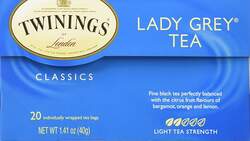
A sophisticated twist to an undeniably sophisticated black tea. Vintage Earl Grey adds the subtleties of rose and lavender to the familiar well-loved tradition of Italian orange bergamot for a smashing afternoon delight. Enjoyed with an intimate circle of friends or in your own personal retreat time, this soothing and lively combination will stir memories of pleasant times well spent.

The Earl Grey blend is named after 2nd Earl Grey, British Prime Minister in the 1830s and author of the Reform Bill of 1832, who reputedly received a gift, probably a diplomatic perquisite, of tea flavored with bergamot oil. Bergamot is a citrus fruit typical of Southeast Asia and grown commercially in Italy.

Monday
Oct312011

Guayusa from the Ecuadorian Amazon

These chilly November mornings are a reminder that the holiday season is here. For me this time of year is exciting because it is an opportunity for friends and families to get together, to relax, enjoy each others’ company, and tell stories about the past year.

The Kichwa people of the Ecuadorian Amazon don’t wait for the last two months of the year to celebrate: Every morning at dawn, they gather to share stories, dreams, music, and myths. The village elders pass on their knowledge to the youth, teaching them hunting techniques, social values, and what it means to be ‘runa’, or ‘fully living human beings.’ During all of this wonderful exchange they drink gourds full of guayusa until the sun rises.

Guayusa is similar to mate (the caffeinated plant from Argentina), however in addition to caffeine is also has theobromine (the stimulant in chocolate) and L-theanine which is in green tea and reduces both physical and mental stress. On top of all that, its anti-oxidant levels are through the roof. Read more about it on our Guayusa page.

Several Kichwa myths recount how guayusa was the first plant that taught people how to conquer fears and have poise and presence through difficulty. If only we were open on Mondays so you could have some before you go Halloween trick-or-treating!

Sunday
Oct162011

Green Tea Chai from Kashmir

Kashmir’s beauty is unparalleled. Upon visiting the Valley of Kashmir, the Mughal emperor Jehangir exclaimed: “If there is paradise anywhere on earth, it is here...”. It lies in the northwestern region of the Indian subcontinent, originally consisting of the majestic valley between the Himalayan and Pir Panjal mountain ranges. 

Today it’s a much larger area split into three subsections: Forty three percent under Indian control, 37% administered by Pakistan, and 20% by China. Since 1947, Kashmir has experienced at least three wars, owing to an ongoing territorial dispute between India and Pakistan. In recent years, the political and public sentiment has turned towards granting Kashmir its own autonomy--with the exception of the Chinese controlled region--though any official resolution between India and Pakistan is not likely in the near future. 

Our Kashmiri Chai is modeled after Kahwah, a popular green tea recipe in Pakistan, Afghanistan, and the Kashmir Valley. Traditional Kahwah is made by boiling green tea leaves with cinnamon bark and cardamom pods, and is served with sugar or honey and crushed almonds. Saffron strands are sometimes also added for honored guests. It is also common to prepare Kahwah like a Masala Chai with both cream and sugar; this is our favorite way to drink it. Our Kashmiri Chai is a blend of cardamom, cinnamon, cloves, chopped almonds, and green tea. We did not include saffron, which sells for over $500 per pound. But if you happen to have some, don't hesitate to throw in a few strands for yourself.

Thursday
Sep012011

The great tea clipper race of 1866

These days, if I want to import tea from India, it is flown practically to my door and arrives within a week. But, during the 18th and 19th centuries it took considerably longer. In the early 1800’s, when the tea trade was largely monopolized by the East India Company, speed was not a consideration. The company wanted to maximize profit by carrying as much tea as possible, resulting in large, slow ships. It took a whole year of hard sailing to get back to Europe from India.

The East India Company lost its monopoly in 1858, following the Indian Rebellion of 1857, when the British Crown assumed direct administration of India during the British Raj. The use of the small, fast Clipper ships began to gain popularity, and eventually escalated to the great Tea Clipper race of 1866 from China to England.

The Taeping, the Ariel, and the Serica left China on May 30th. All three arrived in England fourteen weeks later on September 12th, and within one-and-a-half hours of each other! Given the length of time, the distance, andvariables in ships and crew, this is an amazing feat and a testament to the precision and skill that existed throughout the industry at the time.

The Taeping was the winning vessel, and was awarded an extra ten shillings for each of the 491 tons of tea in cargo. By my calculations, 4,910 shillings in 1866 would be about $237,016 in modern American dollars. Given the prize, you can see why they were racing so hard!

Read the original Gazette article from Wednesday, September 12, 1866 to get more details about the race.

Monday
Aug012011

Irish super hero Cú Chulainn

Ireland is a small country full of big tea drinkers! 4.4 pounds of tea a year are consumed for every man woman and child on the island -- many people drink 5 cups a day. For comparison, a United States citizen is likely to consume under a half pound per year. The Irish are famous for their strong brew, which is accompanied by a very generous amount of cream or milk that is often poured into the cup before the tea is added.

When designing the label for our best-selling breakfast tea, Ann insisted the image be of her favorite Irish super hero Cú Chulainn. I learned two things about Ann that day. First that her love for the Irish goes beyond River Dance, and second that she knows a lot about Irish folk lore!

Cú Chulainn's original name was Sétanta. His nickname comes from an incident when he was a child at which time he killed his host's guard dog in self-defense after arriving late to a party. Out of a sense of personal integrity he offered to assume the guard dog's role in protecting the stables. His oath turned out to be prophetic because he later became the protector of Ulster, one of the four provinces of Ireland, when he rode his chariot into battle and single-handedly defeated the armies of the warring Queen Medb.

There can be no better image for this strong breakfast tea than J. C. Leyendecker’s perfect depiction of Cú Chulainn. Just imagine what you will be ready for after drinking 5 cups!